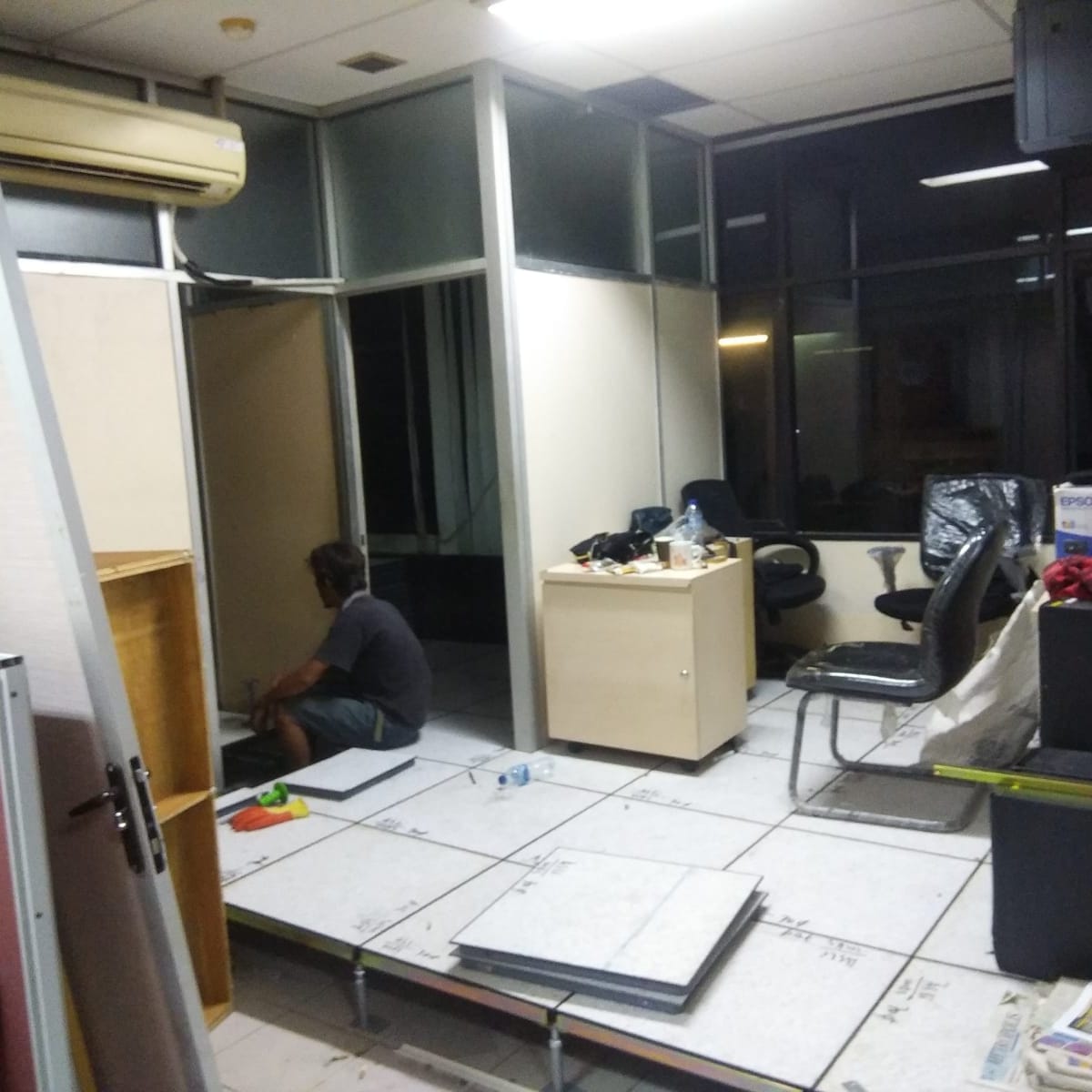
A raised floor is a construction model and method for data center buildings in which an additional floor is built a few centimeters above the concrete slab or main floor of the building.
This framework is designed to support the anticipated load of data center equipment. Although the raised floor was once the standard way to deliver power and provide connectivity, newer designs move cabling overhead and use the space below for chilled-water piping or airflow for hot aisle / cold aisle cooling systems.
With this construction method, the raised floor area in a data center is built between two inches and four feet above the cast concrete floor. This creates usable space for cable routing as well as cooling, electrical, and mechanical systems. In data centers, the raised floor is also used as a way to distribute cold air.
By using a raised floor, a facility not only reduces the amount of air needed to cool equipment, but also requires less energy and improves temperature distribution across all cabinets.
According to research on the impact of raised floors on the thermal behavior of commercial buildings, a raised floor can potentially reduce the cooling load by as much as 40 percent. Combining this system with AI-based cooling solutions can deliver even greater savings.
A raised floor is one of the flooring systems required in offices or certain rooms in various buildings equipped with data centers. Its uses are wide-ranging, from supporting comfort and aesthetics to making cable management in the room easier.
Raised Floor as a Safe and Comfortable Flooring Solution
A raised floor is a flooring system widely needed in buildings. It provides access to data cable networks. This flooring system is therefore worth installing in certain rooms, such as:
- Server rooms
- Banking halls
- Data centers
- Conference rooms
- Office banking areas
- Modern offices
Many other types of rooms also need this kind of floor. As a result, cabling in a room becomes safer and takes up less space. Besides functionality, the look of the room is also a consideration when installing this type of flooring.
Raised floors come in many types and kinds. Some of them are steel concrete, calcium sulphate, and various other materials and designs.
Advantages of Using a Raised Floor in a Data Center Room
For a data center, using this type of flooring is based on several reasons, such as:
Improves the look of the room
A raised floor makes a room look tidier and more attractive. Complicated-looking cables and piping can be hidden within it. Its dimensions are also precise and follow a set standard. The room therefore looks more aesthetic, and your office looks more professional.
Easy installation
This is because the flooring uses a knock-down system. Installation is faster and can be done in a variety of rooms. It is not limited to offices — if you have a workspace at home, you can install one there too, because the process is easy and quick.
Elevation and height can be adjusted to your needs
The panels can be lifted at any time. This makes the flooring more flexible and practical to use in various rooms, including data centers. A raised floor can also be dismantled and reinstalled if you later want to move it to another room or office.
Regulates air circulation
This flooring is very useful for improving air circulation, especially in multi-story buildings. It can increase airflow considerably. This is needed for data center security because servers and cabling systems are located in places not accessible to many people.
Using Raised Floors in Various Rooms
This popular flooring is well suited to rooms that require complex electrical cable installation, such as data centers, IT rooms, server rooms, control rooms and power rooms, office areas, and broadcasting studios.
Many more rooms require installation with this method. Before installing, you can first decide on the material and type of the product, since the market offers many options from different materials and manufacturers. Materials range from wood and calcium to cement. Raised floor heights also vary, from 15 cm, 25 cm, and 30 cm up to 1.5 meters.
Types of Raised Floor You Can Choose
Besides the variety of materials and heights, this type of flooring for data centers can also be chosen by type:
Bare type
This type of floor is made of metal with a vinyl tile or carpet tile finish. It can be used to support office interiors and aesthetics, including corridors and lobbies.
HPL type
This type already has an anti-static vinyl layer and is ready to use at any time. It is ideal for IT rooms and data centers.
You can choose among the raised floor options above yourself. Besides your budget, you can decide based on appearance. This flooring can also serve as storage space for electrical and mechanical equipment.